
Efficient operations of a small business means converting everyday tasks into documented, repeatable processes that deliver consistent results and free you from constant firefighting. Without systems, the U.S. Small Business Administration consistently identifies operational disorganization as a top driver of early business failure. The fix is not working harder. It is building the infrastructure that makes your business run without you holding every piece together. Tasklyte and modern management frameworks both point to the same truth: owners who shift from improvising to systematizing grow faster, hire better, and reclaim their time. This guide covers the six core systems to build first, the management rhythm to maintain, and the planning tools that make it all stick.
What are the core operations of a small business?
The operations of a small business are the documented, repeatable processes that drive daily work across every function. Think of them as the operating system underneath your business. When they are written down and followed consistently, your team produces predictable results. When they exist only in your head, every task depends on your direct involvement.
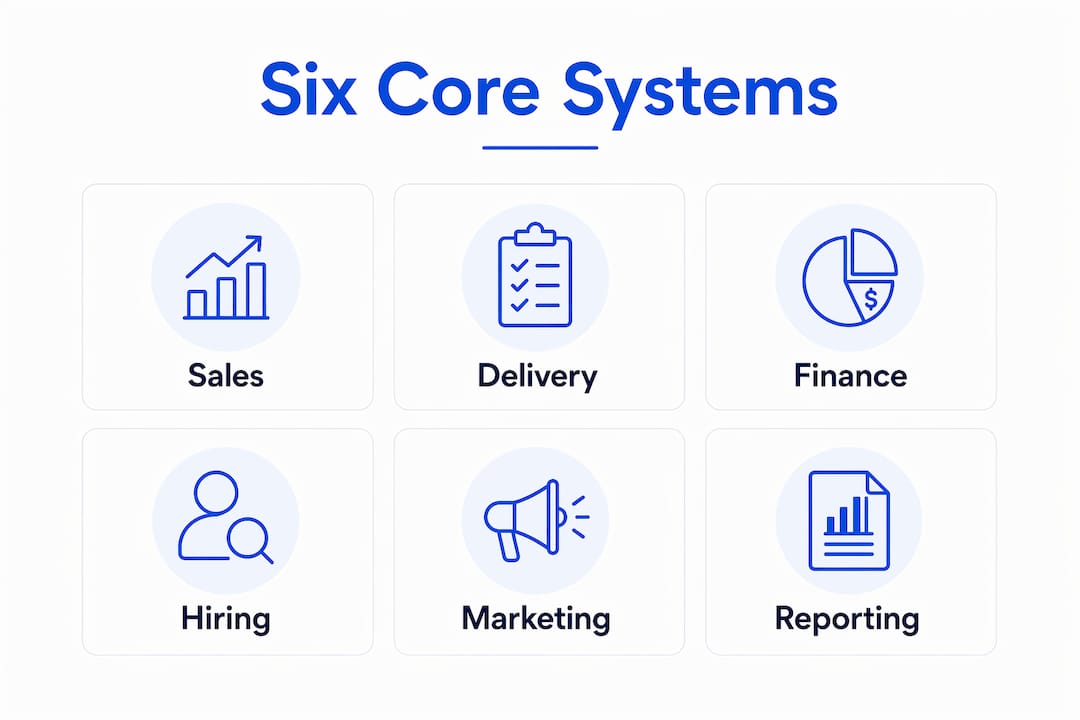
Six core systems cover roughly 80% of small business operational complexity: Sales, Delivery, Finance, Hiring and Onboarding, Marketing, and Reporting and Review. That figure matters because it tells you where to focus first. You do not need to document everything. You need to document the systems that touch the most people and break the most often.

Operations manuals and standard operating procedures (SOPs) are not the same document. Operations manuals provide context and the "why" behind decisions, while SOPs give frontline employees step-by-step instructions. Mixing them into one document reduces clarity for both audiences. Keep them separate from the start.
What are the six core systems every small business should build first?
Start with the system that breaks most often. That is the one costing you the most time, money, and team frustration right now. Once it is documented and stable, move to the next. Here is the priority order most small businesses benefit from:
- Sales system: Define your lead qualification criteria, follow-up cadence, proposal process, and close steps. Without this, revenue is unpredictable.
- Delivery system: Document how you fulfill your product or service from order to completion. This is where customer experience lives.
- Finance system: Establish a weekly cash flow check, monthly profit and loss review, and a clear invoicing and collections process.
- Hiring and onboarding system: Most small businesses lose up to 3 weeks of productivity per new hire because they lack standardized onboarding. A written onboarding checklist cuts that loss significantly.
- Marketing system: Define your content calendar, lead generation channels, and campaign review process. Marketing without a system produces inconsistent output.
- Reporting and review system: Set the metrics you track weekly and monthly. Without measurement, you cannot identify what is working or what needs fixing.
Each system needs three components: a written process, an assigned owner, and a review date. Without all three, documentation becomes shelfware.
Pro Tip: Document your top 10 highest-friction processes first. Attempting to document every process at once causes systemization projects to stall. Start narrow, finish fast, and build momentum.
How do you create a management rhythm that prevents operational drift?
A management rhythm is a fixed schedule of meetings and reviews that keep your team aligned and your operations on track. Without it, operational drift sets in quietly. Priorities shift, accountability fades, and small problems compound into expensive ones.
The recommended rhythm for small business management follows four cadences:
- Weekly team standup (15–30 minutes): Cover what got done, what is blocked, and what is the priority this week. Keep it short and focused on obstacles, not status updates.
- Weekly 1-on-1s: Meet individually with each direct report. Use this time to coach, remove blockers, and check alignment on priorities.
- Monthly financial review: Review your profit and loss statement, cash position, and key revenue metrics. This is where you catch problems before they become crises.
- Quarterly goals review: Assess progress against your 90-day targets, update your plan, and set the next quarter's priorities.
The most common mistake owners make is canceling these meetings when business gets busy. That is exactly backwards. Canceling meetings when busy is when operational drift accelerates fastest. The rhythm is most valuable under pressure, not when things are calm.
Pro Tip: Block your weekly standup and monthly financial review as recurring calendar events with no exceptions. Treat them like client commitments. Your team will follow the standard you set.
What tools and approaches help you scale small business operations?
Scaling operations requires three things: a planning cycle that drives accountability, selective automation that removes manual work, and role definitions that make expectations clear.
The 90-day planning cycle
Annual business plans fail because they are too distant to drive daily behavior. A 90-day planning cycle is more effective because it creates a short enough horizon to stay focused and a long enough window to make real progress. Set 3–5 specific goals per quarter. Each goal should have a measurable outcome, an owner, and a weekly check-in built into your management rhythm.
The 90-day cycle also forces a quarterly reset. You review what worked, drop what did not, and adjust your priorities based on real data rather than assumptions you made in january.
Selective automation
Automation works best when applied to high-volume, low-judgment tasks. Tools like Zapier connect your existing apps to trigger actions automatically, such as sending a follow-up email when a lead fills out a form or creating a task when a new invoice is issued. CRM platforms enable automation without coding and reduce manual errors across sales and customer communication workflows.
The key word is "selective." Automating a broken process just produces broken results faster. Fix the process first, then automate the repetitive steps.
Role scorecards
Role scorecards define measurable outcomes for each position rather than listing job duties. A scorecard for a sales representative might include monthly revenue closed, number of qualified calls completed, and proposal conversion rate. This approach improves hiring decisions, makes coaching conversations concrete, and gives employees a clear picture of what success looks like in their role.
Small business owners who delegate well also rely on external experts. Leveraging CPAs and attorneys for financial management and legal compliance frees owner bandwidth for the work only the owner can do.
What are the most common small business operational challenges?
Most operational problems in small businesses trace back to three root causes: trying to do too much at once, skipping the management rhythm when busy, and failing to measure what matters.
Trying to document everything at once is the most common systemization mistake. Attempting to document every process simultaneously causes projects to stall or be abandoned entirely. The fix is to start with your top 10 highest-friction processes and finish those before expanding.
Skipping measurement is equally damaging. If you do not track your key metrics weekly, you cannot distinguish between a temporary dip and a structural problem. Pick 5–7 metrics that reflect the health of your core systems and review them every week without exception.
Letting documents go stale undermines the entire system. Quarterly review and updates keep your process documents aligned with how work actually gets done. A process that was accurate six months ago may no longer reflect current tools, team structure, or customer expectations.
"A written management playbook encodes owner judgment to make decision-making transferable and consistent. Without it, every new hire or team change forces the owner back into the center of every decision."
The solution to all three challenges is the same: prioritize ruthlessly, measure consistently, and review quarterly. Small business management is not about perfection. It is about building a system that improves over time.
Key Takeaways
Effective small business operations require documented systems, a consistent management rhythm, and quarterly reviews to stay aligned with real-world conditions.
| Point | Details |
|---|---|
| Six core systems first | Build Sales, Delivery, Finance, Hiring, Marketing, and Reporting systems before anything else. |
| Document top friction points | Start with your 10 highest-friction processes to build momentum without stalling. |
| Protect your meeting rhythm | Weekly standups and monthly financial reviews prevent drift, especially during busy periods. |
| Use 90-day planning cycles | Set 3–5 measurable goals per quarter to drive focused, accountable daily behavior. |
| Review documents quarterly | Update process documents every quarter to keep them accurate and useful. |
Why "heroic" management is the real bottleneck
Most small business owners I have worked with are genuinely talented operators. They can solve any problem, fill any gap, and keep any plate spinning. That is exactly the problem.
When the owner is the system, the business cannot grow beyond the owner's personal capacity. Every new hire, every new client, every new challenge routes back through one person. The business does not scale. It just gets heavier.
The shift from "heroic" management to systemic management is the single most important transition a small business owner can make. It means writing down what you know, building processes that others can follow, and accepting that "good enough and consistent" beats "perfect and dependent on you" every time.
I have seen owners resist this because they believe their judgment cannot be captured in a document. That belief is wrong. A written management playbook encodes your decision-making logic so your team can apply it without asking you every time. You do not lose control. You multiply your capacity.
Start with your pain points, not your strengths. Document the processes that frustrate you most, because those are the ones your team is also struggling with. Build the system, test it for one quarter, and refine it. Do not wait until you have time. You will never have time. Build the system so you can get time back.
— Kambros
How Tasklyte supports small business operational growth
Running tighter operations requires consistent execution across multiple functions at once. That is where most small business owners hit a wall.
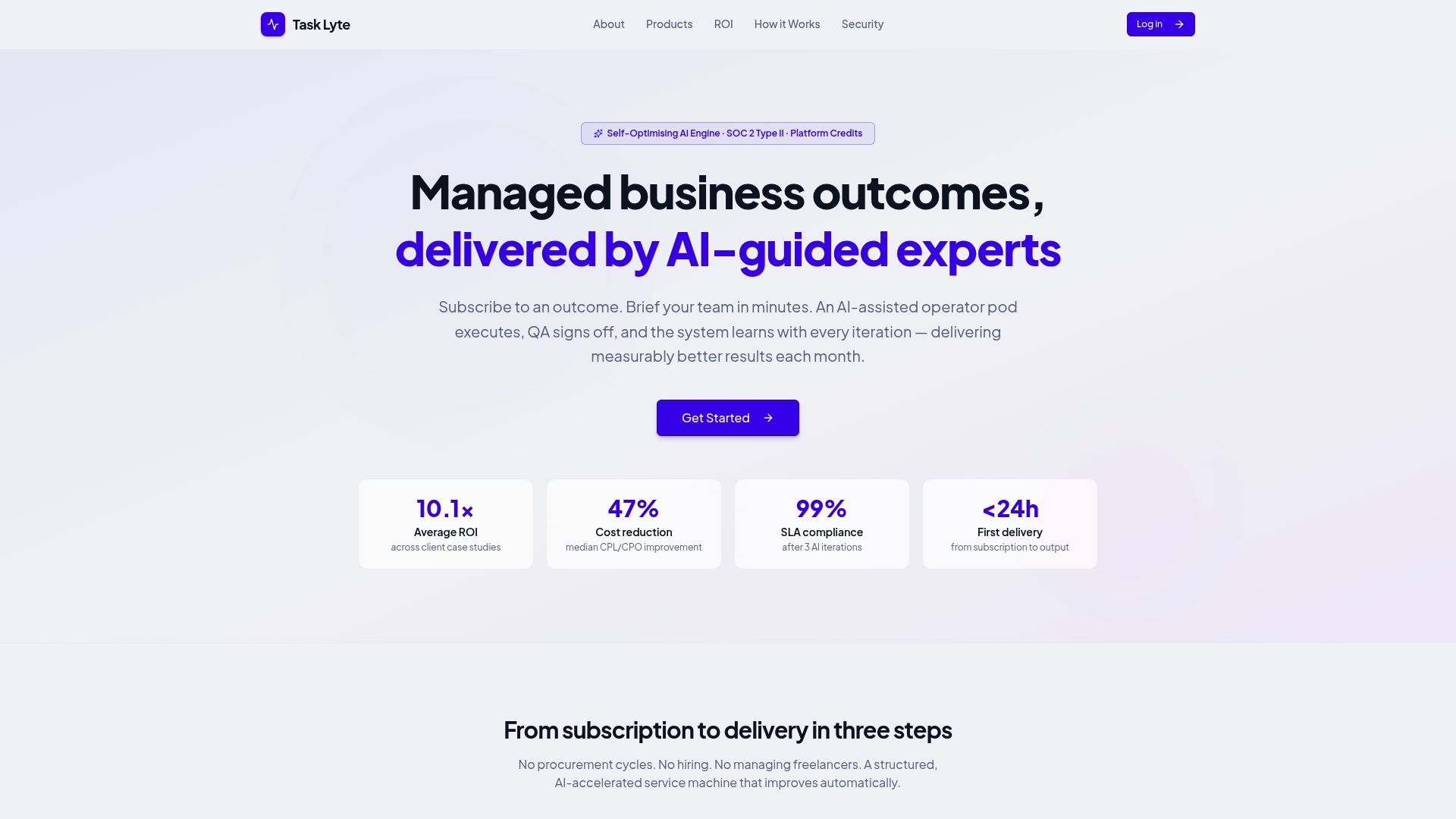
Tasklyte is an AI-powered managed services platform that converts complex business functions into fixed monthly subscriptions. Instead of managing multiple freelancers or vendors, you subscribe to specific outcomes, whether that is demand generation, legal review, or operational support. Tasklyte combines AI-assisted execution with quality assurance to deliver consistent results across every deliverable. Clients report an average ROI of 10.1 times across case studies. If you are building the systems described in this guide and need reliable execution behind them, explore Tasklyte as the operational layer that keeps everything moving.
FAQ
What are the operations of a small business?
The operations of a small business are the documented, repeatable processes that drive daily work across functions like sales, delivery, finance, hiring, marketing, and reporting. When these processes are written down and consistently followed, the business produces predictable results without depending on the owner for every decision.
How do you systemize a small business?
Start by identifying your top 10 highest-friction processes and documenting them one at a time. Build a written process, assign an owner, and set a quarterly review date for each system before expanding to additional processes.
What is a management rhythm in small business management?
A management rhythm is a fixed schedule of weekly standups, weekly 1-on-1s, monthly financial reviews, and quarterly goals reviews that keeps teams aligned and prevents operational drift. Maintaining this rhythm during busy periods is especially critical, since that is when alignment breaks down fastest.
Why is a 90-day planning cycle better than annual planning?
A 90-day cycle creates a short enough horizon to drive daily behavior while giving enough time to achieve meaningful goals. Setting 3–5 specific, measurable goals per quarter produces more accountability and faster course corrections than a 12-month plan reviewed once a year.
How often should small business process documents be updated?
Process documents should be reviewed and updated every quarter to stay aligned with current tools, team structure, and customer expectations. Documents that go stale quickly become ignored, which defeats the purpose of building systems in the first place.